Sunday, January 31, 2016

Thinking about Progress

1.  I define progress as a social and political movement to give women and children basic constitutional rights.
2. The Progressive Era was from the late 1800s through the early 1900s.  This was in response to the major corporations and child labor issues.
3. Things associated with this era are women's suffrage, child labor laws, wage raises, working condition reforms, and living condition reforms.
4.  All of the issues brought up by progressives have to do with lower class people and what they wanted to happen.
5.  The reforms that happened that were listed above ranked from the best reforms to the worst. 1. living conditions  2. working conditions  3. child labor  4. women's suffrage

Friday, January 29, 2016

Future predictions from 100 years ago


1.  There were many predictions 100 years ago that came true.  In this list on Visual News, one prediction made was moving houses on trains.  This partly came true with the invention of mobile homes and RV's. Another prediction was broadcasting theatre shows.  This definitely came true with the invention of television.  One French print on this web page show an airplane rescuing a sinking ship.  With the invention of helicopters, this came true.  Another web page shows two people driving cars with machine guns on top of the cars in a war.  This came true in World War I & II with the use of tanks and early models of jeeps that were know as Ford GPW's.  On this web page, Isaac Asimov made predictions about telecommunications.  He said "Communications will become sight-sound and you will see as well as hear the person you telephone. The screen can be used not only to see the people you call but also for studying documents and photographs and reading passages from books. Synchronous satellites, hovering in space will make it possible for you to direct-dial any spot on earth, including the weather stations in Antarctica." This prediction from only 50 years ago came true with the popular use of Apple's Facetime and Skype.  

2.  Most of the predictions in the articles I read were "wish list" items.  They predicted that modern life would have more amenities and convinces.

3.  There were many predictions that could not be done even with modern technology.  Weather machines were far out of reach and still are, cities with roofs are impractical, and car shoes are too dangerous.  

4.  These predictions are mostly technologies that are aimed to make life easier.  And also technology for first responders to make chasing down criminals and putting out fires easier.  

5.  In the future I would like to see water shoes that can be worn to walk on water, passenger undersea boats, personal airships, and personal hovercrafts.

6.  Controlling the future.  While institutions, the government, groups, NGO's, non-profits and others are changing the future constantly, individuals have as much control as they want.  People around the world can either lash out in violence or simply resist new technology to show that they're not interested.  
  

Tuesday, January 19, 2016

How do you analyze a political cartoon?

How to read political cartoons. 
Observe the cartoon and use prior knowledge to get an idea of what is going on.  Then look for symbolism, exaggeration, and irony.  Use external resources as needed.
Symbolism - physical things represent an idea. 
Exaggeration - artists will exaggerate characteristics of a political figure or an idea.
Irony - the difference in the way things should be and what is expected.

This cartoon shows men who represent what the past American wars have been over.  The Philippines has a massive brick depicting how the Spanish oppressed them.  

This cartoon shows Uncle Sam, who looks very scary, lecturing children that represent the Philippines, Puerto Rico,  Cuba, and Hawaii.  The classroom setting shows that the U.S. was in charge and told their territories what to do, otherwise they were punished.  

This cartoon has an exaggerated image of Theodore Roosevelt marching through the Caribbean.  This cartoon is about how he ordered the navy around in the Spanish American War.  


Friday, January 15, 2016

Economic Effects of the Annexation of Hawaii

Topic: Annexation of Hawaii
Focus: Effects of annexation on Hawaii's economy.
Angle: U.S. sugar corporations benefited from sugar production and tourism, while Hawaiians were hurt from annexation.

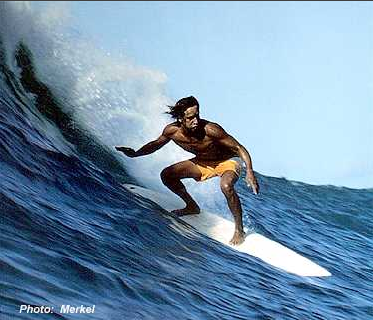
Hawaiian, The Legend of Eddie Aikau

1.  The documentary was named Hawaiian, The Legend of Eddie Aikau, because Eddie Aikau embodied the Hawaiian culture.
2.  This film's "thesis" is that the Hawaiian culture isn't dead because of Eddie Aikau's surfing carreer and how he drew surfing back to Hawaii.
3.  Since ESPN made this film, they understood that their viewers wanted to be entertained rather tha informed about the Hawaiian culture and Eddie Aikau's personal life.  So, they showed images and videos of him surfing with voice overs covering his surfing career.
4.  If PBS or History made this film they would have focused more on his personal life, the Hawaiian culture, nature, and how the culture is dying.  They love to focus on how specific cultures are dying.

If I were a documentarian I would document the annexation of Hawaii.  My focus would be the effects of annexation on the Hawaiian economy.  The angle would be that large corporations that made profits off of the cheap labor from sugar plants and tourism killed the local Hawaiian economy.


Wednesday, January 6, 2016

Phrenology

1.  Our group went and looked at the L.N. Fowler bust and took some initial notes.  Then we went on our computers and got a better understanding of Phrenology and its history.

2.  I learned that different combinations of search terms can lead to better results

3.  Mariam-Webster defines provenance as "the history of ownership of a valued object or work of art or literature" and "the origin or source of something"


Monday, December 14, 2015

Tenement living conditions and sanitation

Conditions of urban New York were barely livable.  There were very little laws regulating how tenements were designed.  With two-thirds of New York City's population living in urban areas, builders and landlords saw an opportunity for a huge profit.  So they just renovated old houses and made them the worst conditions possible.  Tenements were described as, "narrow, ill lighted, badly ventilated and overcrowded[.]" Living conditions at the time were certainly not competent for the population.


In 1881 the New York City Department of Street Cleaning was made to clean the streets of garbage.  Four years later there was an incinerator built on Governor's Island.  This incinerator only burnt 25% of New York City's trash, the rest was dumped in the Atlantic.  Then in 1895 George Waring became the Commissioner of the Department of Street Cleaning.  He initiated a waste plan that made ocean dumping illegal and started a recycling effort.  His plan divided trash into 3 categories.  Food waste was steamed and compressed to make grease and fertilizer.  Rubbish was paper and other materials, and ash was landfilled with other non-marketable rubbish.  Later in 1905, New York City used an incinerator to make electricity.

Despite the efforts of the Sanitation Department living conditions remained the same.  It was not until 1901 that the New York State legislature passed regulations on living conditions of tenement houses.  The Tenement House Act of 1901 put heavy regulations on tenement buildings.  For example, each bedroom required a window and had to have cleaning access.  All public spaces had to be lit naturally or artificially.  Landlords had to install metal fire escapes with ladders.  Fire escapes even had to be in the hallways and on the first floor.  The law now required at least one indoor toilet for every two families.  With these new laws came enforcement.  The organization that enforced the laws was the Tenement House Department.  They sent inspectors to investigate tenement complaints, and there were a lot of them.  If the property did not comply with the law, landlords faced fines and potential condemnation of their property.  


Landlords were not very happy about these new regulations.  So, builders and landlords found ways to bend the law even though it would cost them less to build a new building that complied with the law.  One example is how landlords would sometimes install windows that opened up into the interior airshafts.  There was even a group of landlords and builders that acted politically to delay the full effect of the law by 10 years.  This group was the United Real Estate Owners' Association.  


Since landlords had an extra 10 years to not worry about regulations the conditions stayed the same.  An article in the New-York Tribune (31 May 1903 p.7) shares some of the complaint letters that were written.  These letters reveal the truly inhumane conditions that the landlords provided for their tenants.  One letter reads, "Why has the inspector not come? Four weeks has a dead cat been under the staircase, and the odor is awful."  The next letter tells about the extremely dangerous conditions that tenants had to endure.  "Please come and look after the house of No. - Suffolk-st., because the gas didn't burn[.]"  My breath was taken away when I read this letter.  Not only could everybody in the tenement died of gas poisoning, the whole building could have caught on fire if somebody decided they were going to smoke indoors.  


So, what caused New York's issue with disease, living conditions, and waste management?  The clear cause were the masses of immigrants that came and stayed in New York.  Ellis Island best exemplifies New York's trash problem throughout its history.  When New York needed to expand, the government built Ellis Island with landfill material.  Ellis Island originally had about 3 acres of land, the other acres were built with landfill.  This is not a very practical use of a landfill but it shows how much trash New York had.  With time living conditions got better.  The Tenement House Act is still the standard for apartment regulations today. But New York still struggles finding new ways to rid the city of garbage.


Sources:
Jstor: book with photos of Jacob Riis.
I used this source to look at some of Jacob Riis' photography

cuny.edu: Timeline of New York waste management
I used this source to get certain dates of the Sanitation Department's History

Library of Congress, Chronicling America: article describing tenement conditions
I used this to get a description of what tenements were like

Library of Congress, Chronicling America: article with tenant complaints
I used this to read some of the complaints

PovertyHistory.org: Tenement House Act
I used this to research what the tenement house act required

Gizmodo: Ellis Island built on trash
I used this to see what parts of New York were built on trash